Hurricane Ian (2022, SW FL): Shelter Security and the Chaos Multiplier
Hurricane Ian made landfall September 28, 2022. The storm tested every Southwest Florida facility and revealed the specific security work our region requires.
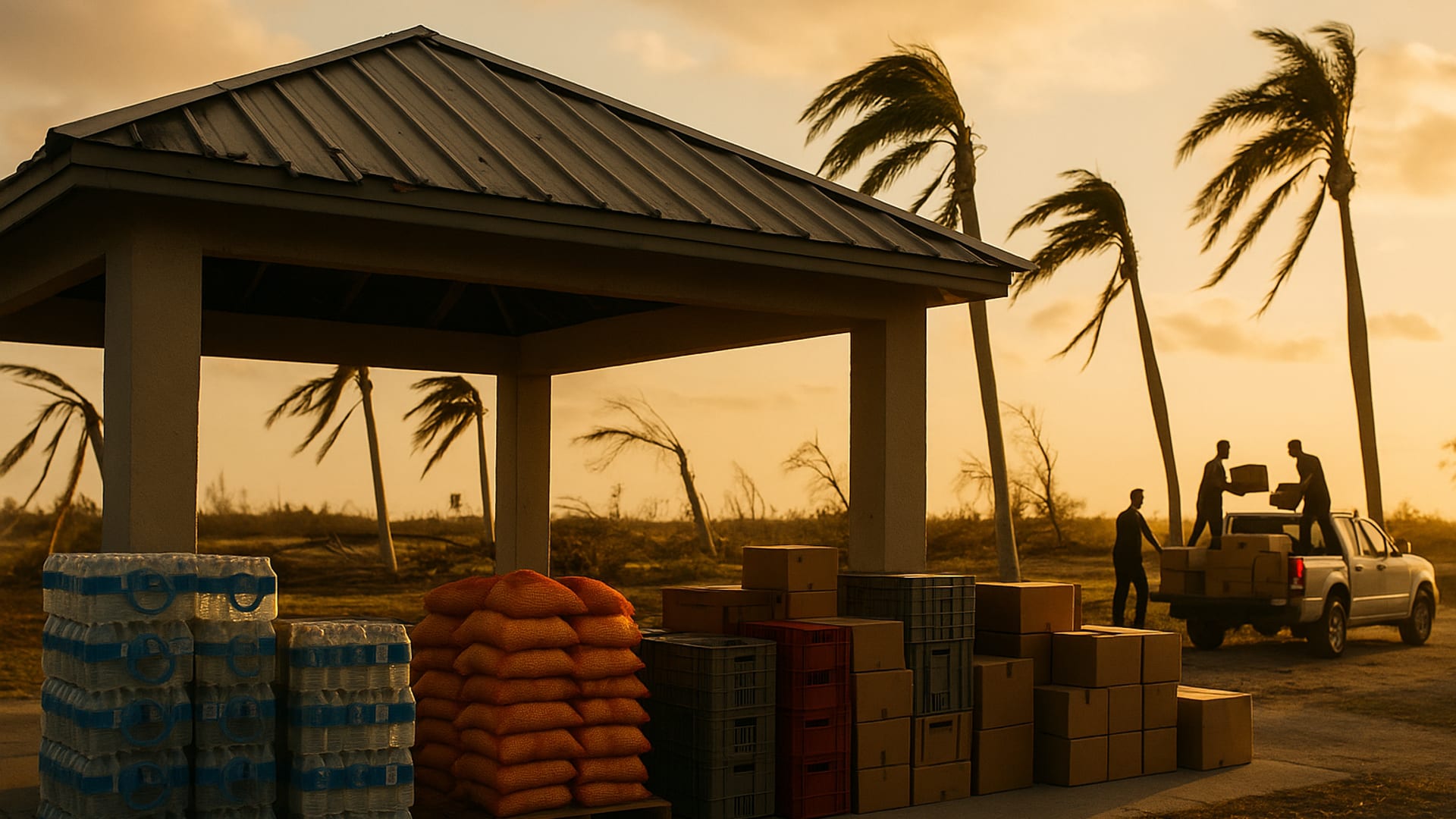
September 28, 2022.
Hurricane Ian made landfall near Cayo Costa, Florida, on the afternoon of September 28, 2022, as a catastrophic Category 4 storm with maximum sustained winds of 150 miles per hour. Storm surge reached 10 to 15 feet along portions of the Southwest Florida coast. Rainfall exceeded 20 inches in some inland areas. The direct impact zone covered Lee, Charlotte, Sarasota, and parts of Collier County, with significant effects extending across much of South Florida.
Ian was the deadliest hurricane to strike Florida since 1935 and one of the costliest natural disasters in American history. Its specific pattern of destruction affected communities and institutions in Fort Myers, Cape Coral, Naples, Port Charlotte, Punta Gorda, Sanibel, Captiva, Fort Myers Beach, and throughout the region.
Every institution in our region tested its preparation against Ian. Some were ready. Some were not. The contrast between the two categories has continued to shape regional security and emergency planning.
The specific profile of Ian.
Ian was distinct from earlier Florida hurricanes in several ways that matter for institutional planning.
Intensity at landfall
Ian struck as a Category 4, stronger than most Florida landfalls of the preceding two decades. Hurricane Charley in 2004 (also SWFL, Category 4) was the most comparable recent event.
Storm surge
The surge was among the most devastating in modern Florida history. Coastal barrier islands were dramatically affected. Inland flooding extended much further than many residents expected.
Path and timing
Ian’s forecast path shifted significantly in the final 48 hours. Areas that had planned to shelter in place briefly found themselves in the direct impact zone. Areas that had expected a direct hit were spared the worst. This dynamic created real-time decision pressure for institutional leaders.
Post-landfall impact
The storm crossed the state and exited through South Carolina, producing significant damage throughout its path. Southwest Florida bore the most severe impact, but effects extended widely.
Long recovery
Recovery has been a multi-year process. Infrastructure damage was extensive. Many homes, businesses, and facilities have been years in repair.
What Ian revealed about institutional preparation.
Working with clients and peer institutions through the Ian response and recovery, we observed consistent patterns distinguishing well-prepared organizations from those that struggled.
Written plans versus rehearsed plans
Organizations with emergency action plans that had been recently reviewed and rehearsed executed with greater confidence and efficiency than those with plans that had been filed and not revisited. The gap was not about the quality of the written document. It was about whether the document had become operational knowledge in the team.
Pre-storm vendor relationships
Organizations with established vendor relationships (monitoring services, installers, cleanup, generator service) could access those relationships during and after the storm. Organizations calling vendors for the first time during or after the event often waited much longer for response.
Pre-storm LE relationships
Organizations with existing liaison relationships with local sheriff’s offices and police departments could coordinate directly during the storm and recovery period. Organizations without those relationships had to start from introductions during the most constrained resource period.
Staff and volunteer communication
Organizations with robust communication trees that reached everyone, including those without regular access to email or social media, could maintain coordination. Organizations dependent on single communication channels often lost significant team members for days.
Facility hardening
Florida’s hurricane-code construction held up dramatically better than older construction. Organizations that had invested in hardening (impact-rated glass, reinforced entries, structural improvements) often reopened faster and with fewer losses than those that had not.
Physical backup
Organizations with physical backup power (generators, battery banks) for critical systems maintained operational capability longer than those dependent solely on grid power.
Data backup
Organizations with proper data backup systems (offsite, cloud, redundant) recovered operationally faster than those dependent on single-location systems.
Insurance readiness
Organizations with current, comprehensive insurance documentation had smoother claims processes than those with inadequate documentation. Pre-storm documentation of facility condition (photos, equipment inventories, security system state) supported claims significantly.
The security-specific dimensions.
Beyond general preparation, Ian produced specific security-relevant observations.
Alarm systems during outages
Organizations whose alarm systems relied on commercial power and internet without adequate backup lost monitoring capability for extended periods. Some systems resumed when power returned. Some required service visits. During the outage, many facilities were effectively unmonitored.
Camera systems
Similar to alarm systems, camera systems dependent on grid power and internet typically stopped recording during the event and its aftermath. Storage drives sometimes failed under the stress of extended outages, humidity, and power fluctuations.
Physical security during evacuations
Evacuated facilities were often unsecured for extended periods. Looting and opportunistic theft were reported, though less severe than some feared. Organizations with hardened facilities, clear closure protocols, and trusted local contacts to check on property fared better.
Volunteer displacement
Staff and volunteers from many organizations were personally affected: homes damaged, displaced, family concerns. Organizations that recognized this reality and adjusted plans accordingly maintained better long-term capability than those that expected normal service resumption.
Post-storm contractor fraud
The recovery period produced extensive fraud: unlicensed contractors, fake insurance adjusters, door-to-door scams. Organizations that had pre-established vetted vendor relationships were less vulnerable than those that hired recovery contractors ad hoc.
Social engineering during crisis
Scams specifically targeting Ian-affected populations proliferated. Phishing attacks referencing FEMA assistance, fake charitable appeals, and various other social engineering attempts targeted donors, staff, and communities. Security awareness that extended to these patterns protected organizations.
The shelter security dimension.
For organizations that served as community shelters during Ian or in its immediate aftermath, specific security considerations applied.
Shelter populations
Shelters housed populations including families with young children, elderly individuals with medical needs, people with mental health challenges, and occasionally individuals whose interpersonal situations (domestic violence, custody disputes) added complexity. Managing these mixed populations in compressed spaces required specific attention.
Entry control
Shelters needed to balance controlled entry with the humanitarian reality that people arriving might need immediate help. Clear protocols for intake, identification, and space assignment supported this balance.
Medical response
Shelter operations included medical emergencies beyond typical operational response: medication needs, dialysis access, oxygen, wound care from pre-shelter injuries, mental health crises. Organizations partnering with qualified medical providers could address these better than those relying solely on internal capacity.
Family dynamics
Domestic violence and custody situations sometimes surfaced in shelter settings. Staff training in recognition and appropriate response mattered significantly.
Staff and volunteer support
Sheltering is exhausting work. Staff and volunteers working extended shifts in stressful conditions required specific support, including mental health resources, relief scheduling, and recognition.
The faith community response.
Churches and faith-based organizations across Southwest Florida played significant roles during and after Ian.
Some served as shelters. Some coordinated distribution of supplies. Some provided meals. Some mobilized volunteer crews for cleanup and mucking out. Some coordinated pastoral care for grieving families. Some rebuilt damaged homes in partnership with organizations like Habitat for Humanity, Mennonite Disaster Service, and others.
The response was an expression of mission. It was also a significant operational lift that taxed the capacity of organizations that had planned for typical weekly operations. Churches that had done prior preparation handled the additional load better than those that had not.
The passage is a promise of presence through difficulty. For Southwest Florida faith communities that walked through Ian’s waters, both literally and metaphorically, the passage carries specific weight. The presence was real. The overwhelming did occur in some ways. The continuing witness of the region’s communities of faith, now three years into Ian recovery, demonstrates that the promise is not canceled by difficulty but tested through it.
The long recovery.
Recovery from Ian has been a multi-year process. Many aspects remain ongoing. Rebuilding. Mental health effects in affected communities. Organizational adjustments that settled into new baselines different from pre-storm operations. Insurance disputes. Public policy reforms.
For security and emergency planning professionals working in our region, Ian has become a shared reference point. Plans developed after Ian reflect lessons that could not have been learned without experiencing the event. Organizations that came through the storm have developed institutional knowledge about regional-scale emergencies that previous plans could not have anticipated.
What this means for future readiness.
Three lessons apply broadly for Southwest Florida institutions preparing for future events.
Lesson 1: Preparation is continuous.
Hurricane preparation is not a seasonal activity. It is the baseline posture of institutions in our region. Maintained continuously, preparation is robust when tested. Assembled reactively, it is often inadequate.
Lesson 2: Relationships matter more than resources.
The institutions that handled Ian best were not necessarily the wealthiest. They were the ones with strongest pre-storm relationships with vendors, first responders, peer institutions, and their own staff and volunteers. Relationships are the infrastructure that enables operations when other infrastructure is stressed.
Lesson 3: The post-event work is part of the event.
Response does not end when the storm passes. It extends through recovery, claims, repairs, reconstruction, and long-term institutional adjustment. Planning that stops at the event itself misses most of the work.
The specific next-storm work.
For Southwest Florida institutions three years into Ian recovery, current questions include:
- Has the emergency action plan been updated to reflect Ian lessons?
- Are hardening investments made post-Ian still current and operational?
- Are staff and volunteer communication trees current with post-Ian personnel changes?
- Are vendor relationships current and tested for hurricane response?
- Are insurance documentation and coverage appropriate to the post-Ian reality?
- Are law enforcement and emergency management relationships current?
- Have trained staff and volunteers been through at least one rehearsal including hurricane-specific scenarios since Ian?
If the honest answer to any of these questions is “not really,” the current season is the time to address it. The gap between preparation and emergency is the defining variable.
In honor of the communities.
Communities across Southwest Florida have demonstrated tremendous resilience through Ian and its recovery. Churches, nonprofits, daycares, senior living facilities, businesses, and families have rebuilt, regrouped, and continued. The work has been costly and is in many ways ongoing.
Security and emergency preparation work done in our region exists in continuity with this larger story of resilience. The specific professional work of audits, planning, training, and advisory is one small contribution to the broader resilience the region continues to demonstrate.
If your organization in Fort Myers, Cape Coral, Naples, Port Charlotte, or the surrounding communities wants to ensure that its next-storm preparation is as honest and complete as Ian’s lessons demand, we would be glad to have the conversation. The next significant storm will come. The work of being ready for it is the work available to us now.
Ready when you are
A plan that's actually rehearsed.
Emergency action planning that becomes a program. Written, trained, rehearsed, and current when the storm arrives.
Build a real planRelated Insights
Keep reading.
Emergency Action Plans That Actually Get Rehearsed
Most emergency action plans live in binders. Plans that work are the ones rehearsed, reviewed, and carried in the team's muscle memory. Here's how to build one.

Liaison Work: Building Your Relationship with Local LE, Fire, and EMS
A quiet but high-leverage part of any serious security program is establishing a real relationship with local law enforcement, fire, and EMS before you need them.
The 30/60/90-Day Security Action Plan Explained
A good audit ends with a 30/60/90-day plan. Here's how P23 decides what goes where, why pacing matters, and how to use the plan with leadership.