Pediatric Triage: What Daycares and Children's Ministries Need to Know
Children are not small adults. Pediatric triage uses different protocols and thresholds. Here's what daycare and children's ministry staff should know.
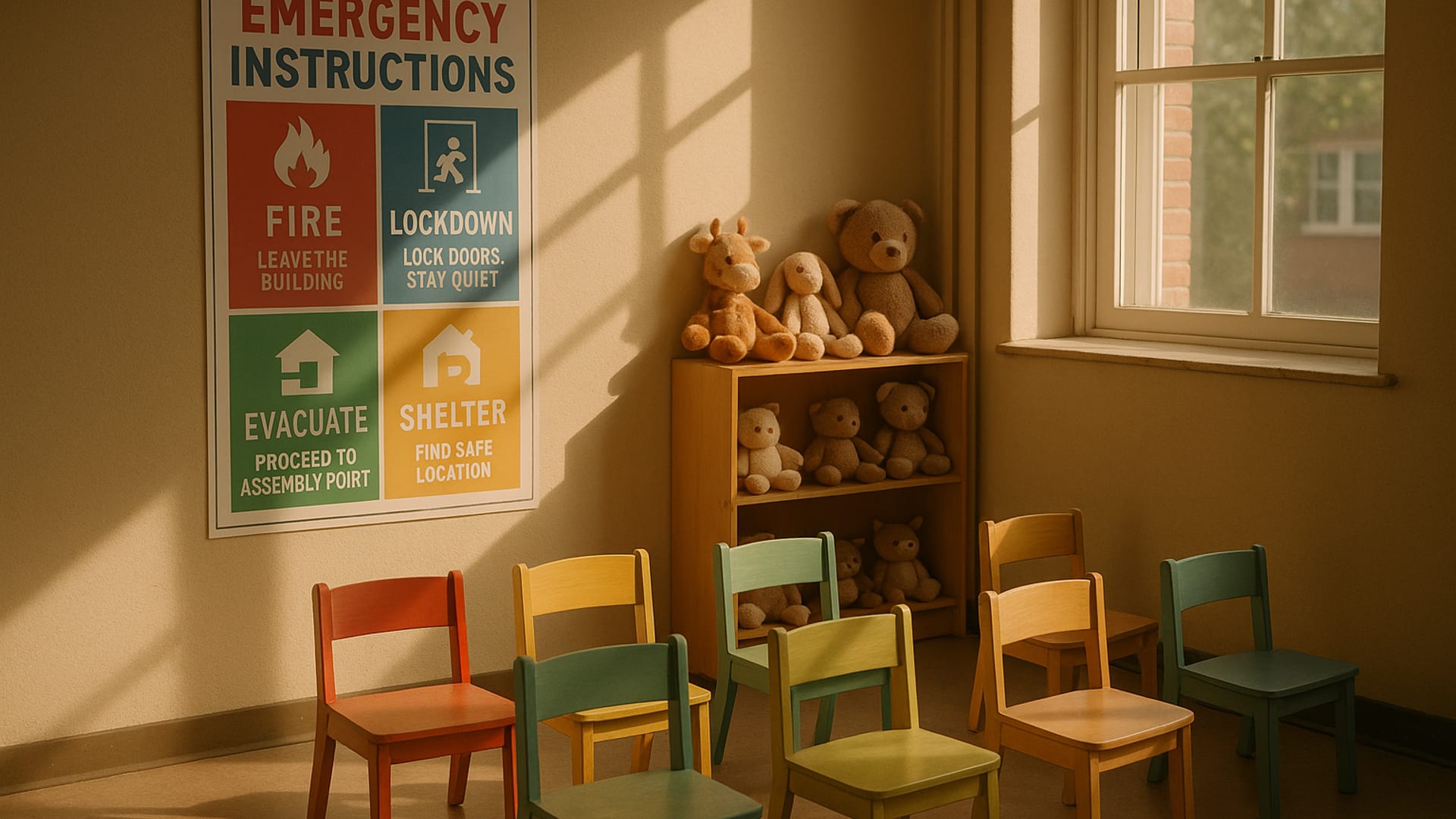
Children are not small adults.
That sentence is the first principle of pediatric emergency care. Children’s physiology is different in specific, medically important ways. Their airways are smaller and more easily obstructed. Their ability to compensate for blood loss is longer and more dramatic, followed by more sudden collapse. Their normal vital signs vary by age. Their medication doses are weight-based, not adult-minus.
Adult response protocols applied to children miss critical cases. A child can present as stable right up until the moment they are not. The only reliable correction is to train caregivers on pediatric-specific response from the beginning.
Why daycares and children’s ministries need specific training.
Organizations caring for children in Southwest Florida are responsible for:
- Daycare centers in Fort Myers, Cape Coral, Naples, and Port Charlotte
- Children’s ministry programs in churches
- Mother’s day out, preschools, and after-school programs
- Senior living facilities that host grandchildren visits
- Nonprofits serving children through counseling, tutoring, sports, or mentorship
Across this range, the medical emergencies actually encountered include:
- Allergic reactions and anaphylaxis
- Seizures, including fever-induced febrile seizures
- Choking on food or objects
- Playground injuries and falls
- Asthma exacerbations
- Diabetic emergencies (for children with Type 1 diabetes)
- Drowning or near-drowning, especially given Florida's pool density
- Behavioral or mental health crises
- Severe injuries from the rare but meaningful active threat scenario
Each of these has a specific pediatric response protocol. None of them are handled well by generic adult first-aid training alone.
JumpSTART, in brief.
JumpSTART is the most widely used pediatric mass-casualty triage protocol in the U.S. It covers children aged approximately 1 to 8. It runs through a structured sequence:
Step 1: Walking children
Children who can walk are classified green (minor, walking wounded). Direct them to an assembly point.
Step 2: Breathing assessment
For non-walking children, check breathing.
- If the child is breathing normally: continue assessment.
- If the child is not breathing: open the airway. If they begin breathing, classify red (immediate). If they do not begin breathing, give 5 rescue breaths. If still not breathing after the rescue breaths, classify black.
This rescue-breath step is the major difference from adult triage. Children often have respiratory causes for non-breathing that adults do not. Five rescue breaths can restore normal breathing and salvage the child. Adult protocols do not include this step.
Step 3: Breathing rate
If breathing rate is between 15 and 45 breaths per minute, continue. If breathing is faster than 45 or slower than 15, classify red.
Step 4: Pulse and perfusion
If pulse is present, continue. If not, classify red.
Step 5: Mental status
A simple responsiveness check, typically using an AVPU-like scale adapted for children (Alert, responds to Voice, responds to Pain, Unresponsive). Unresponsive or responding only to pain is classified red. Others are classified yellow.
The protocol is designed to produce a triage decision in under 30 seconds per child in experienced hands.
Bleeding control in children.
Stop the Bleed techniques apply to children with size-appropriate modifications. Specifically:
- Direct pressure is applied the same way, with less force for smaller children
- Wound packing is applied the same way, with smaller amounts of gauze and less aggressive packing depth
- Tourniquets are applied to arms and legs larger than a pediatric standard (typically children over 2 years old, though this varies by tourniquet brand and the child’s size). For very small children, a pediatric tourniquet or improvised pressure approach may be more appropriate.
Most commercial tourniquets are designed for adult limbs. For facilities that serve very young children, pediatric-specific tourniquet training is worth investing in. Major trauma bleeding in very small children is rare but, when it occurs, benefits from specific preparation.
Choking: the most common pediatric emergency.
Choking is dramatically more common than active threats. Every daycare and children’s ministry should have clear, rehearsed protocols for pediatric choking response:
- For infants under 1: Five back blows alternating with five chest thrusts.
- For children 1 and older: Abdominal thrusts (Heimlich), adapted to the child’s size.
- If the child becomes unconscious: Begin CPR with particular attention to the airway.
Every staff member in a children’s facility should be trained on these protocols. They are simple, the training is short, and the real-world application is frequent.
Anaphylaxis and EpiPen use.
Food allergies are increasingly common in children. Every organization serving children should:
- Know every child's allergy profile and have documented authorization for emergency medications
- Have an EpiPen (or equivalent) available on-site, with staff trained to use it in an emergency
- Understand how to recognize anaphylaxis (rapid onset, swelling, difficulty breathing, widespread rash, drop in blood pressure)
- Know that EpiPen administration should happen first, before 911, and then 911 follows
- Train on expiration date checks for all emergency medications on the premises
Florida allows licensed child care facilities to administer emergency medications with appropriate authorization. Check your specific licensing requirements with the Department of Children and Families.
Reunification: the overlooked piece.
In any significant incident at a facility serving children, reunification with parents is one of the most operationally difficult tasks. Children must be released only to authorized adults. Parents arrive in varying states of alarm. The media may be present. Law enforcement may be controlling the scene.
A pre-planned reunification protocol includes:
- An off-site reunification point, away from the affected facility
- Documented authorization for pickup, with verification
- A staff member responsible for logging every reunification
- Communication templates for notifying parents
- Coordination with law enforcement on perimeter and access
The reunification piece is the part most easily forgotten in scenario planning and most critical in real events.
The charge is an unambiguous call to the protection of children. The operational question for every children’s organization is whether its training, its protocols, and its staff capability reflect the seriousness of that charge. Pediatric triage training is one element of the answer.
The Southwest Florida specifics.
Our region introduces factors worth naming for pediatric response:
- Water exposure. Florida leads the U.S. in drowning deaths for children under 5. Every children’s facility near water (pool, canal, lake, bay, ocean) should have water-specific emergency protocols.
- Lightning. Outdoor activity during Florida’s thunderstorm season (May-October) requires clear protocols for bringing children indoors quickly when storms approach.
- Heat. Heat-related illnesses in children can develop quickly, especially during outdoor play in summer months. Protocols for hydration and recognition of heat exhaustion and heat stroke should be rehearsed.
- Hurricane readiness. Pediatric facilities need shelter-in-place and evacuation protocols sized for children, including evacuation transportation that can accommodate children safely.
The training we recommend.
For daycares, children’s ministries, and children-serving nonprofits in Southwest Florida:
- Pediatric CPR and choking response for all caregivers (annual certification)
- Stop the Bleed with pediatric adaptations for key staff
- EpiPen and emergency medication training, with current authorization documentation
- JumpSTART triage awareness for senior staff and security team (4 hours)
- Annual reunification drill with documented process
- Rehearsed protocols for the most likely pediatric emergencies at your specific facility
The total training commitment is modest. The payoff, measured in confidence and capability, is substantial.
Caring for children is a high calling.
Pediatric triage and emergency training is not glamorous work. It is the quiet, careful preparation that makes ordinary caregivers ready for the hardest day the facility will ever see. For organizations in Fort Myers, Cape Coral, Naples, and Port Charlotte that serve children, it is worth the investment.
If your daycare, children’s ministry, or children-serving nonprofit is ready to build this capability, we would be glad to help plan and deliver the training. The curriculum is mature, the techniques are teachable, and the commitment from a small, trained team produces measurable readiness over time.
Ready when you are
Train the response before the day that tests it.
Taught by a combat veteran, sized for civilians. Role-appropriate, scenario-based, respectful of the people in the room.
Plan a training sessionRelated Insights
Keep reading.
Avoid, Deny, Defend: The Doctrine Everyone Should Know
Avoid, Deny, Defend is the civilian doctrine for active threats from Texas State's ALERRT program. Here's what it is, why it matters, and how it gets taught.

Priorities of Life in a Mass-Casualty Moment
In a mass-casualty moment, care is given by priority, not by sequence. Here's how civilian responders think about who to help first, and why.
Scenario-Based Practice vs. Lecture: Why Repetition Beats Reading
Security training that sticks is training that was practiced. Here's why scenario repetition outperforms lecture, and how to build rehearsal into your program.